Northridge Presbyterian: The Podcast
Welcome, we are a PCUSA church in the Lakewood neighborhood of Dallas, TX who seeks to inspire transformative faith through compassionate community, relevant worship, and extravagant generosity.







Episodes
Aug 28, 2022
Aug 28, 2022
14 min
August 28, 2022
Youth Sunday
Romans 12:9-18
Music by AudioCoffee from Pixabay
Aug 21, 2022
Aug 21, 2022
16 min
August 21: Church Stories - 1 Corinthians 13 - and the greatest of these is love…
Reflect
Love is patient, love is kind… This portion of the letter to the church at Corinth is perhaps the best known of all Paul’s writings and we are most used to hearing it read at weddings. How do you hear these words differently when you know it was written to a congregation in conflict?
Verses 8-13 suggest that we grow in wisdom and understanding as we grow older.
What is something in your faith that you understand better now than when you were younger?
What practices help you see God more clearly?
Connect
Have quotes from the Bible’s epistles ever been used to justify cruelty or injustice against
you or someone you love? How did that affect your view of the Bible? How did it affect your view of the apostle Paul?
What verse from this passage relates to what you think Christians need to hear right now?
Act
Take time to write a letter to your current church or to a church from your past. (You don’t have to deliver it!) Include your thoughts, praises, critiques, and observations about love and/or what 1 Corinthians 13 has taught you.
Factoid/Digging Deeper
“Paul says the same of human knowledge about God, whether written by a theologian, proclaimed by the prophet, or acted out by the healer. Even though a person can have outward appearance of knowing God theologically, receiving God’s word prophetically, working God’s works miraculously, and saying the unsayable, if that one is puffed up with knowledge or self-important about her or his faith, then there can be no witness to the One who in love emptied himself.” -Cynthia A. Jarvis from the Connections Commentary Year C, Vol. 1
Music by AudioCoffee from Pixabay
Aug 14, 2022
Aug 14, 2022
23 min
August 14: Church Stories - Colossians 3-4
Reflect
What special challenges would be experienced by such a faith community, especially one composed of new Christians?
What are the behaviors associated with being clothed in Christ? Think about stories about Jesus and the things he taught that provide the source for this list of behaviors.
What is the relationship between these behaviors and the guidance given to family relationships in 3:18-24?
Connect
The family relationships in Colossians 3:18 - 21 are based off of Roman household codes. I wonder how these family relationships described in this passage are similar and/or different from your own family relationships? Are these family relationships still relevant to us today? Why or why not?
How has forgiveness impacted your life? This could be forgiving yourself and/or others. Share a time you either forgave yourself and/or another person with someone close to you.
Act
Colossians 3:12 instructs us to “clothe [ourselves] with compassion, kindness, humility, gentleness, and patience.” I wonder what that really means to you? Brainstorm a list of actions and/ or ideas of what that really means to you, taking into account your own identities, history and experiences, and context. Then, share that list with a friend and/or family member, and, together, carry out one of those actions.
Factoid/Digging Deeper
Digging deeper- Watch this 6 minute video to better understand cultural, historical, and situational context of Epistles
https://bibleproject.com/explore/video/new-testament-letters-epistles-historical-context/?utm_source=web_social_share&medium=shared_video
Intrigued? Watch this 6 minute video to better understand the literary context
https://bibleproject.com/explore/video/new-testament-letters-literary-context/?utm_source=web_social_share&medium=shared_video
Music by AudioCoffee from Pixabay
Aug 7, 2022
Aug 7, 2022
25 min
August 7: Sea Stories- Matthew 14: 22-33 - Jesus Walks on Water
Reflect
It has been said that science tells us how, but the Bible tells us why. How does this statement help you think differently about miracle stories?
What does Jesus’s ability to walk on water suggest about his power?
What does Jesus’s walk on water suggest about his relationship with his disciples?
Connect
How have you made sense of the Bible’s miracles stories in the past? What guidance have you
received from faith leaders, family, and friends? Has it been helpful or not-so-helpful?
How has doubt impacted your life? This could be doubting yourself, others, or God. Share your journey of doubting with someone close to you.
Act
We frequently focus on Peter’s doubt in this story. What are some things that cause you to doubt? What helps you believe more fully? Make a list of your answers for these two questions and keep them for when you might need them the most.
Digging Deeper
For more on the miracles of the New Testament, see Jeffrey John’s The Meaning in the Miracles.
Music by AudioCoffee from Pixabay
Aug 1, 2022
Aug 1, 2022
20 min
July 31: Gospel Stories- Acts 8: 26-40 Philip and the Ethiopian Eunuch
Reflect
Arguably, both Philip and the Ethiopian found the way they looked at the world was changed by their encounter. I wonder what changed for each man?
The Ethiopian was a double outsider to Philip’s world. What might this text tell us today about how we are to treat the outsiders we meet?
Connect
Think about a teacher who helped you understand and appreciate scripture. Who was it and what did they do that is so memorable?
Who are some people you consider to be Ethiopian eunuchs - men and women who society treats as outsiders today?
Act
In your neighborhood, find at least one agency that helps serve different community needs (e.g. food, clothing, shelter, a place to gather and connect, etc.). Visit this organization and find out ways that they are welcoming to both outsiders and community members and ways that you can get involved. Then, share what you have learned with your friends and family and become involved together.
Factoid:
The scripture that the Ethiopian was reading without understanding is drawn from a series of passages referred to as the Suffering Servant Songs. They describe a leader whose strength is rooted in what the world describes as weakness. There are four of these songs, found in Isaiah 42:1–4; Isaiah 49:1–6; Isaiah 50:4–11; and Isaiah 52:13–53:12. How do these passages take on new meaning if you know the full story of Jesus?
Music by AudioCoffee from Pixabay
Aug 1, 2022
Aug 1, 2022
14 min
July 24: Gospel Stories - John 4 - Jesus and the Woman at the Well
Reflect
What evidence would you cite that this woman’s life was changed by her encounter with Jesus?
What do you consider living water to be?
Connect
I wonder how society today would treat this Samaritan woman at the well? Would it be similar and/or different from how she was treated when she met Jesus? Why or why not?
Who are some people you consider to be Samaritan women at the well today - men and women who are marginalized or considered to be social outcasts because of one or more of their identities?
Act
Find a place of worship in your neighborhood community that has different religious practices than Northridge (E.g. either a different denomination of Chrisitianty or a different religion altogether). Without doing any prior research, attend a worship service and/or event at this place. Then, write down at least 3 things that you learned and/or were surprised about, and then share them with your friends and family.
Factoid
Who were the Samaritans? These long separated cousins of Israel who lived in the old Northern Kingdom. They did not experience the forced Exile and intermarried with other tribes. As a result they had different religious practices, including proper locations for worship. In Jesus’s time the Israelites looked down on Samaritans because they considered them impure.
Music by AudioCoffee from Pixabay
Jul 17, 2022
Jul 17, 2022
20 min
July 17: Resistance Stories - Revelation 13: 1-10 - The first beast of the Apocalypse
Reflect
What is your initial reaction to this scripture from Revelation?
Some scholars consider Revelation as writing to encourage frightened and persecuted Christians that as powerful as evil might be, in the end it will not prevail. Other scholars see it as a caution to these same Christians to not give in and join the powers of the empire. Which reason resonates more to you? Why?
Connect
If this dragon-beast were alive today, what would conquering and waging war against God’s chosen people look like? What would be the cause(s) of this war today?
Have you felt a connection between wonder and God’s astounding love? If so, how?
Act
Think about someone in one of your communities who is in need/suffering. Visit them and get to know them and their story. Then, together, using your imaginations, your sense of wonder, and your connection with one another, brainstorm ways that you both can be reminded of God’s love, even when you feel alone, hopeless, or scared (E.g. nature walks, calls with loved ones, meditation, praying (alone or with others), writing, creating art etc.).
Factoid
Revelation is an apocalypse, that is an unveiling or disclosing. It peels back layers of pomp, pretense, fear, and uncertainty to expose true forces at work in the world. It uses highly symbolic and theologically charged language to offer hope to those suffering under the weight of empire. It reminded early Christians, and continues to remind us today that goodness is ultimately stronger than empire. In the end, God wins!
Music by AudioCoffee from Pixabay
Jul 10, 2022
Jul 10, 2022
19 min
July 10: Resistance Stories - Amos 5:21-25 - Let justice roll….
Reflect
Amos identifies himself as a shepherd and cultivator of sycamore-fig trees. He warns of coming judgment on the people of Israel and Judah. Using dates of the kings he mentions, we know he delivered his message between 760-755 BCE. Amos calls the nation to repentance for the ways the rich take advantage of the poor, saying the judgment will take the shape of extended drought and famine.
How does this background affect your understanding of his image of justice rolling down like water and righteousness like an ever flowing steam? How does this metaphor speak to you about justice and righteousness?
Connect
If Amos were alive today, what do you think his observations about life in our city/state/country might be?
Who are some people you consider to be modern-day prophets—men and women willing to challenge the powerful and speak up for the marginalized?
Act
Think about a specific issue that angers and/or confuses you (E.g. racism and discrimination, unequal treatment/opportunities/pay based on one’s identities, poverty, manipulation, war, hunger, etc.).
Then, narrow down your issue or issues using these guiding questions:
Specifically, what makes you feel angry and/or confused about this issue?
Think about a specific context and/or population that is directly affected.
Reflect on how you and/or your community are affected by this issue. What is your and/or your community’s personal experience regarding this issue? What are some similarities and/or differences? (through journaling, a contemplative walk, a conversation with a friend, etc.)
Finally, research specific organizations and resources and think of tangible and direct actions that your community could engage in today that would help educate and raise awareness. Share with your community and make an action plan together.
Factoid
Biblical prophets were not fortune tellers, but were individuals who spoke on behalf of God, typically calling the nation to repentance. They spoke truth to power. Frequently they began their message with warnings, but ended with a word of hope for restoration. Sixteen prophets lend their names to books of the Bible. Amos was one of the so-called minor prophets. This designation was not a reflection on the importance of their messages, but the relative brevity of the books.
Music by AudioCoffee from Pixabay
Jul 5, 2022
Jul 5, 2022
19 min
July 3: Ecclesiastes 3:1-8 For Everything There is a Season
Reflect: Ecclesiastes is described by many as pragmatic advice, yet this is a beautiful and poetic description of life. What strikes you as realistic about how life unfolds? This passage is frequently read at funeral services. How does this description of life give you hope?
Connect
Think about the seasons of life mentioned (birth, death, sowing, reaping). Identify times in your life when each of these seasons seemed to dominate your experience. How did you experience the presence of God differently in these different seasons? How did your experience of God remain the same?
Act
Who comes to mind when you think of a person of wisdom? Set up a phone call or get together to share with them about why you think they are wise and ask them about the experiences that led to that.
Digging Deeper
Context matters when we read scripture. It can be helpful to consider the historical/cultural context of how the original audience might have heard the passage. It is also helpful to pay attention to the literary context… how does this passage fit into the larger message of the book? Watch this 7 minute animated video (https://bibleproject.com/explore/video/wisdom-ecclesiastes/) to learn more. How does this help you better understand the passage?
Music by AudioCoffee from Pixabay
Jun 27, 2022
Jun 27, 2022
20 min
June 26: War Stories - Joshua 6
Reflect: What do you consider to be Joshua’s strengths as a leader? What do you find disturbing about this story? How do you balance the good news and bad news in this story?
Connect:. Have a conversation with someone about these questions: What are some hard questions you have about the Bible that perhaps you’ve been afraid to confront? What does it look like for you to “face these questions head-on, mind and heart fully engaged, willing to risk the loss of faith if that’s where the search leads”? And what might it mean to continue in your faith, even if your questions and doubts are not fully resolved?
Act: Choose a scripture that has brought you doubts or has been the source of your hard questions. Read it everyday this week and see if you can approach it with curiosity, so that when you have doubts about scripture you can more fully engage it instead of turning away from it.
Digging deeper
The book of Joshua is a remembered history, written centuries after the event when Israel was a world power in its day. What might have been the actual story before storytelling embellishments became part of the story? After careful reading of the text, what evidence might you cite that this is an embellished story?
Music by AudioCoffee from Pixabay
About Us
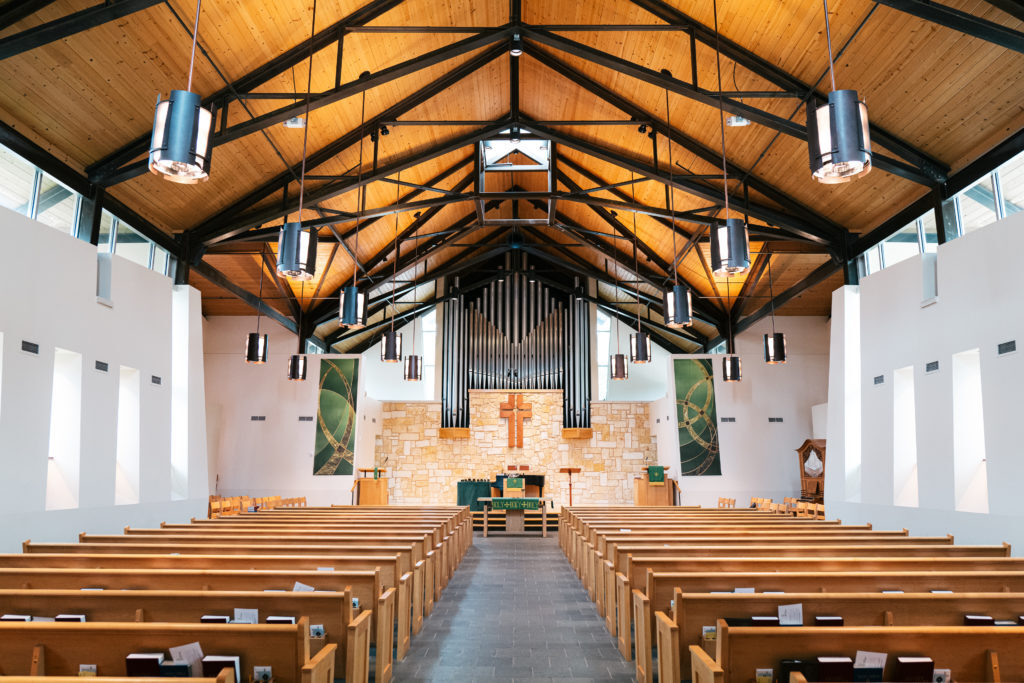
At Northridge Presbyterian Church, we believe that the church is a gift that everyone deserves to enjoy. The church is a community of people who are committed to doing life together – enduring life’s heartaches and celebrating life’s joys, seeking out laughter, pursuing a more just world, and following the path Jesus set out for us.
Northridge is an open and affirming congregation within the Grace Presbytery of Presbyterian Church (USA).